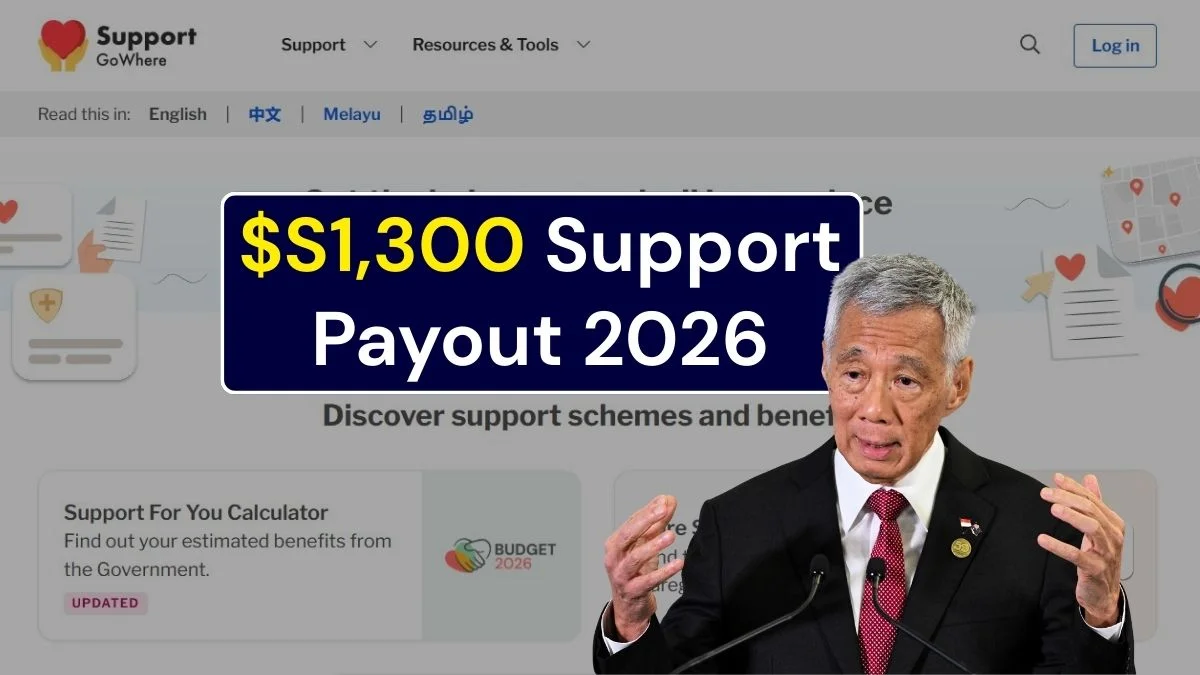
Let’s clear this up first—there isn’t a single official scheme literally called a “S$1,300 payout.”
What people are referring to is a combined total from multiple government benefits under the Assurance Package and related schemes.
So yes, you can receive up to around S$1,300 in 2026, but it comes from different components stacked together.
What Makes Up the “S$1,300” Support?
Here’s how that number usually adds up:
- Cash payouts (Assurance Package cash)
- CPF top-ups (especially for seniors)
- U-Save rebates (for utility bills)
- MediSave top-ups (healthcare support)
- Additional schemes like Silver Support Scheme
Not everyone gets the full amount—it depends on your income, age, and housing situation.
CDC Vouchers 2026: Where to Spend $300 in Singapore
Who Is Eligible?
Most Singapore citizens will qualify for some level of support, but the full benefit is targeted.
You typically need to:
- Be a Singapore citizen living in Singapore
- Earn ≤ S$100,000 annually
- Own no more than one property
And then there’s prioritization:
- Lower-income households → highest payouts
- Seniors → extra support via Silver Support + CPF
- HDB residents → additional utility rebates
The system uses existing records, so there’s no need to apply manually.
Payment Timeline (2026)
The money doesn’t come all at once—it’s spread out.
- Jan–March 2026 → First payouts (cash + some rebates)
- Mid-2026 → Additional disbursements
- Late 2026 → Final rebates + top-ups
You’ll receive funds via:
- PayNow (NRIC-linked)
- Direct bank credit
- GovCash (if no bank account)
What This Actually Helps With
This isn’t just “extra money.” It’s designed to reduce pressure where it matters most:
- Daily expenses (groceries, transport)
- Utility bills (electricity, water)
- Healthcare costs (via MediSave)
- Insurance premiums
- Loan repayments
For many families, this reduces the need to rely on credit cards or personal loans.
Why This Matters Right Now
Here’s the thing—cost of living isn’t going down anytime soon.
The GST Voucher Scheme and Assurance Package are meant to offset GST increases and inflation, especially for middle- and lower-income households.
Instead of one big payout, Singapore’s approach is more practical:
- Smaller amounts
- Spread across the year
- Targeted where you actually spend money
Quick Reality Check
- Not everyone gets S$1,300
- It’s a combined estimate, not a fixed payout
- Lower-income households benefit the most